

I discovered how much I enjoyed snow removal at 13, when my father first asked me to clear the yard on our farm. Snowblowers have fascinated me ever since. A trained automotive mechanic and welder, I bought the repair shop where I worked in 2000. I have always enjoyed building, modifying, and improving equipment. In winter, when things are quieter at the shop, I put my ideas to the test, often with the help of friends who work in snow removal.
In 2006, I bought my first snowblower and began looking for ways to improve it. Buying a farm tractor and another snowblower in 2009 gave me more opportunities to experiment. My goal was clear: move more snow in the same amount of time without requiring more engine power. I was not simply trying to throw snow farther; I wanted to make better use of the available power.
Making the Snow Flow More Efficiently
Much of my work focused on the fan. At 540 rpm, a four-blade fan brings a blade past the snow 36 times per second. That leaves only about 28 milliseconds between blade passes. In that brief interval, blade shape matters: it must help snow enter the fan and stay there until it is discharged.
My tests also drew my attention to snow escaping through the gap between the blade tips and the drum frame, just before it reaches the chute outlet. If that snow remains in the drum, energy is needed to pick it up and discharge it again. I designed a control ring whose shape helps guide snow through the fan’s operating phases. Together with the blade profiles, the ring also helps increase suction. Its configuration is intended to reduce the risk of an object becoming lodged in that gap and damaging the fan shaft.
I also worked on the auger, which moves snow toward the center of the snowblower. Its center reinforcements are positioned so they do not act like scoops or unnecessarily obstruct the flow of snow to the fan. Feed fins added to the auger flights opposite the drum help provide a more consistent feed to the fan. They also help the snowblower empty faster when it stops, for example when an operator needs to wait for the snow discharge to end before turning the chute.
A Meeting and a Shared Project
For years, I spent a lot of time at Normand’s booth at the Salon Industrie et Machinerie agricole de Québec. I looked forward to seeing the latest improvements and talking with the team about the changes I had made to my own snowblowers. I met a team there who shared my drive to find solutions and keep improving snow removal equipment year after year.
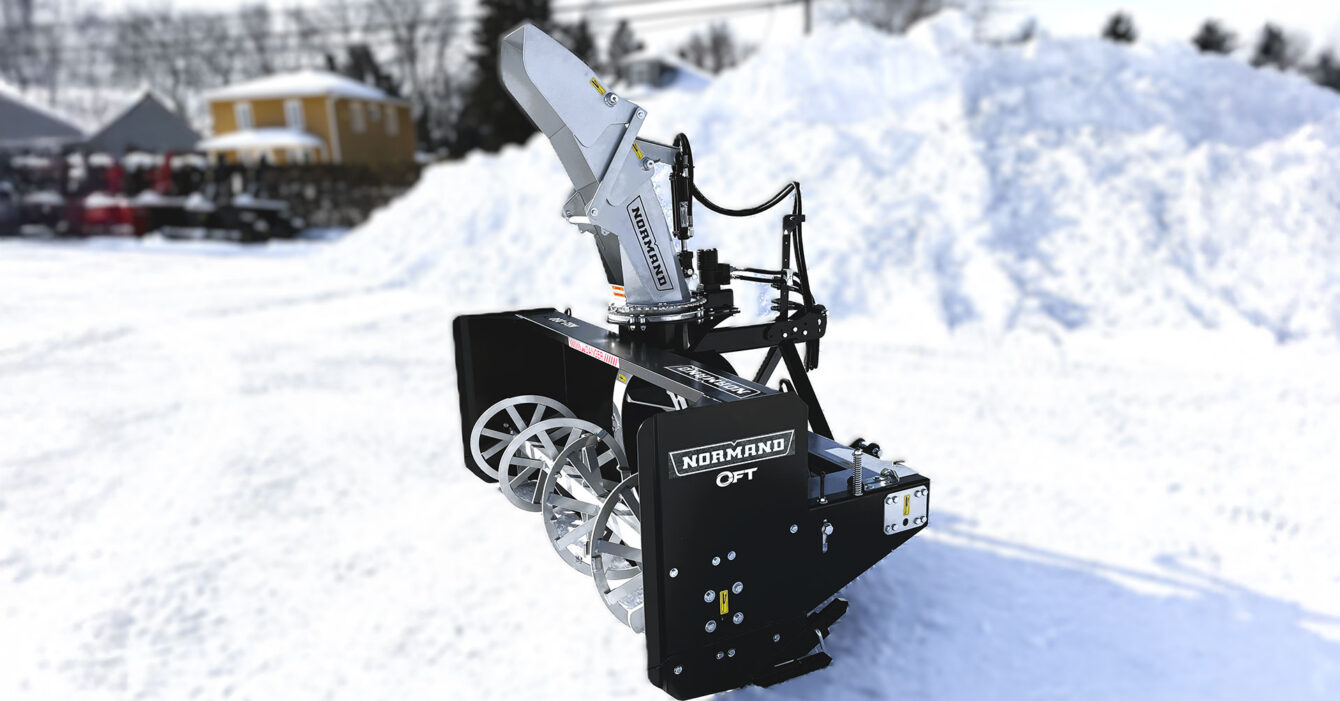
I filed my first patent application in 2022. When it came time to take my innovations further, Normand Co. was the partner I wanted to work with. After several years of development, those ideas have become part of Normand’s commercial OFT series. OFT stands for Optimized Feed Technology. Normand now holds the rights to my innovations and has incorporated them into a line of snowblowers designed for the demands of professional snow removal.
I still spend my winters observing, experimenting, and looking for ways to do better. Seeing that work take shape in a Normand snowblower is a source of great pride.